Paul Revere’s Ride
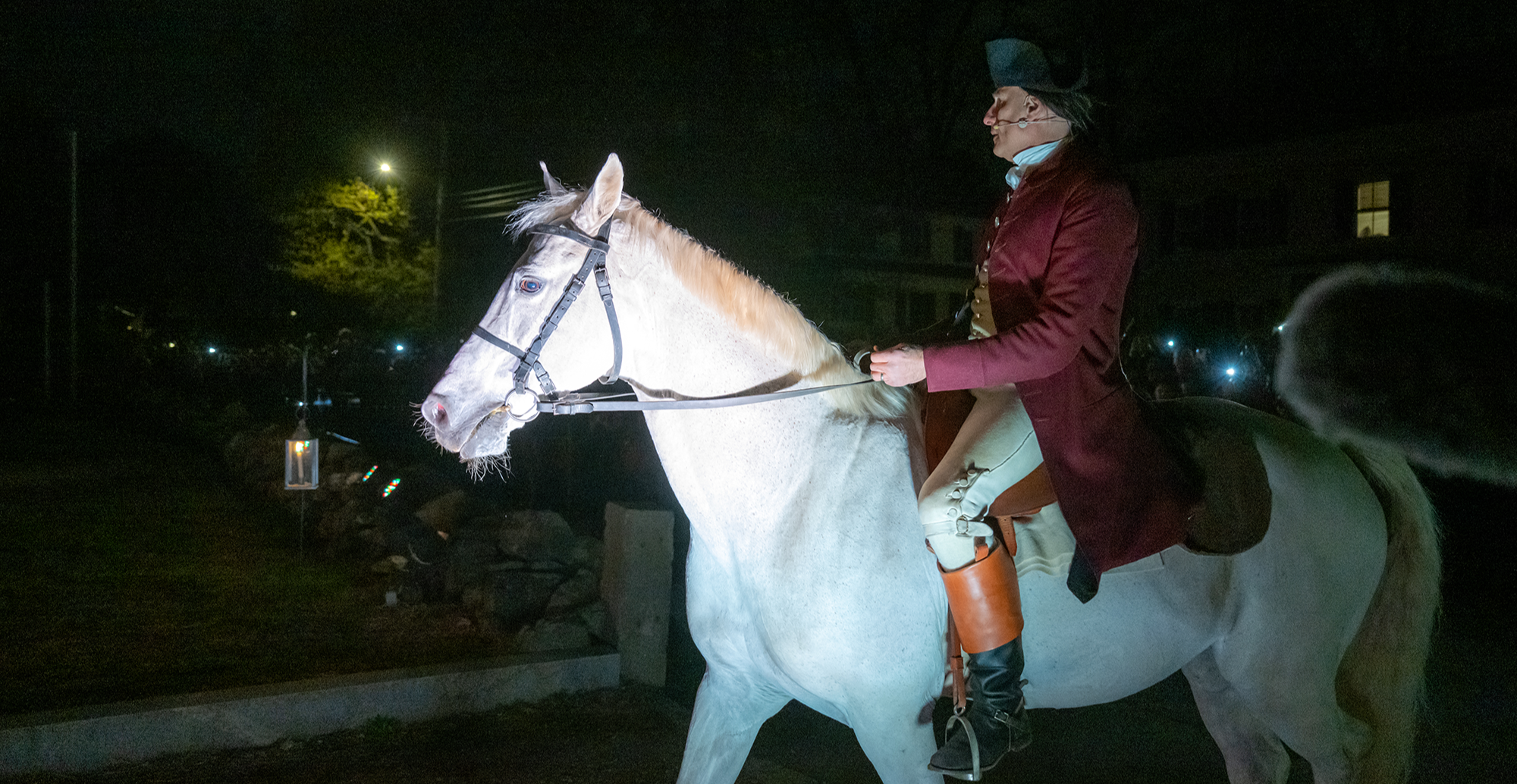
Listen my children, and you shall hear…generations have learned of Paul Revere’s heroism on the night of April 18th, 1775, from Henry Wadsworth Longfellow’s 1860 poem “Paul Revere’s Ride.” This beloved poem was never meant to be historically accurate - join us to learn what really happened that night!
Who was Paul Revere?
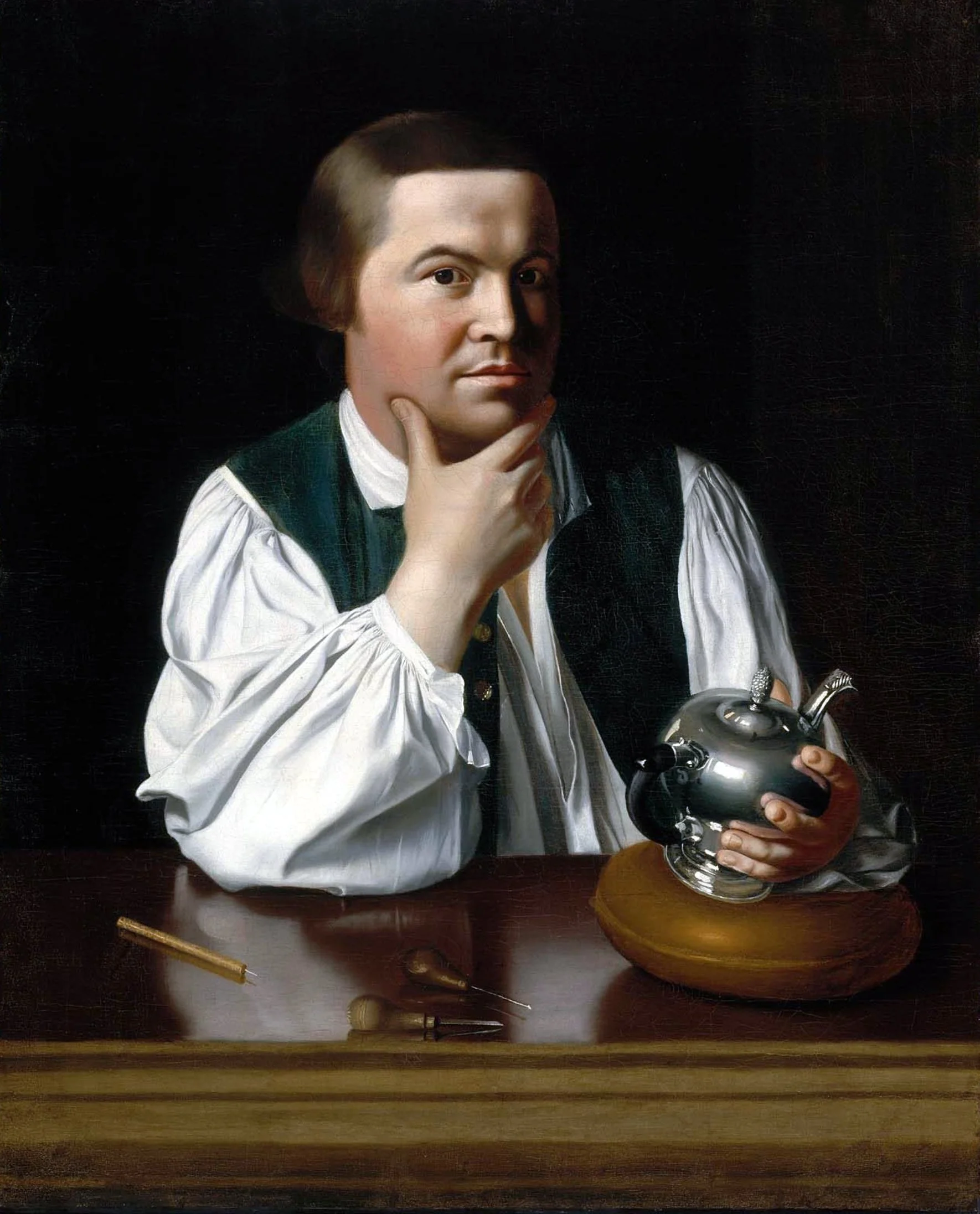
Paul Revere (1735 - 1818) was a Boston silversmith, engraver, and express rider. He is best known for bringing news of the impending British military raid to the Massachusetts countryside on the night of April 18th, 1775. The son of an American mother and French father (family name Rivoire), he became a prominent member of Boston society crafting silver teapots for the wealthy, and in later years expanded his businesses to work in iron, bronze, and copper, crafting church bells and even the copper sheeting used to cover the hull of the USS Constitution.
The economic troubles preceding the Revolutionary War affected Boston’s artisans, and Revere became involved in its politics early on, joining the Sons of Liberty in opposition to British overreach. In 1770, he produced a popular engraving of the Boston Massacre that helped spur locals to the Patriot cause. After participating in the Boston Tea Party, he worked with the Committee of Safety, a Patriot group preparing for war, as a messenger, using his contacts in towns throughout greater Boston and New England to spread word of developments in the Revolution.
April 18th, 1775
British soldiers in Boston began to gather on the evening of April 18th, 1775, alarming Patriots that an attack on Concord’s military depot was imminent. The Committee of Safety was concerned about John Hancock and Samuel Adams, who were in Lexington and wanted by the government.
At 10:00 PM, Revere was called upon by Patriot leader Joseph Warren, who informed him of the danger and tasked him, along with another messenger named William Dawes, to alert Hancock and Adams. Dawes rode south out of Boston via a land route, and Revere was rowed across the Charles River and borrowed a horse in Charlestown to ride on.
Meanwhile, accomplices placed lantern signals in the steeple of the Old North Church steeple, informing the Patriot network outside of Boston that the soldiers were also taking boats across the river. The signals reached Charlestown, where further riders were dispatched to spread the message to the countryside.
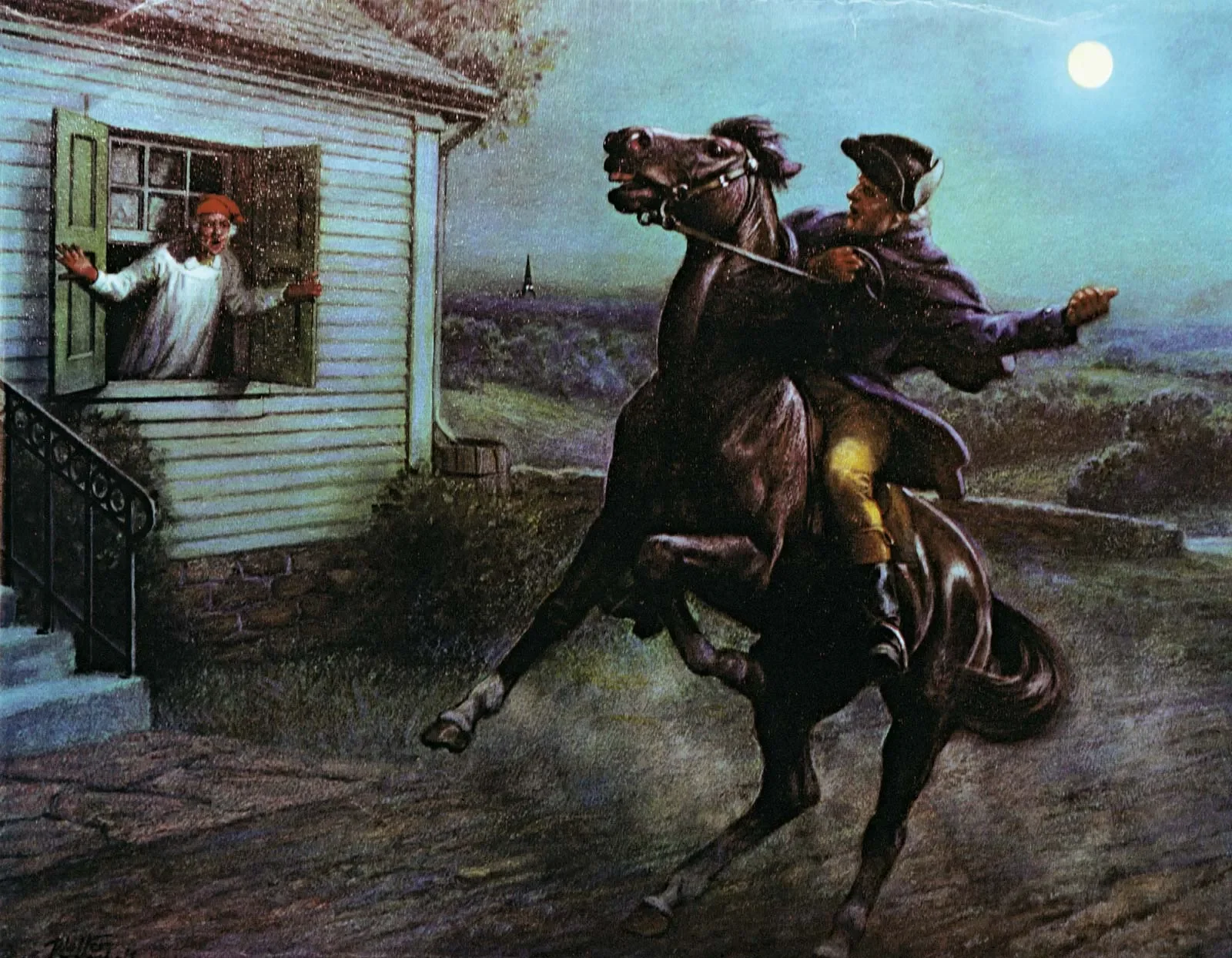
Revere arrived in Lexington at about 11:30 PM, and Dawes at about 12:00. At the Clarke parsonage, where Hancock and Adams were staying, sentry William Munroe urged the strange rider to stay quiet, as the family was asleep. According to Munroe, Revere responded “You’ll have noise enough before long, the Regulars are out!” After relaying their message, the two men decided to continue on to Concord, having no knowledge of whether word had reached there yet. On their way, they were joined by Samuel Prescott, a young doctor from Concord, who was returning home and offered to assist them.
The men had gotten halfway to Concord when they were ambushed by a British patrol. Prescott, who knew the terrain best, was able to escape and bring the news to Concord. Dawes also escaped, and Revere was captured. With a British pistol pressed to his head, he told the soldiers that he had alarmed the people and that they would fail in their mission. When the soldiers heard gunfire in the distance, they decided that Revere was telling the truth, took his horse, and dropped him near the town center.
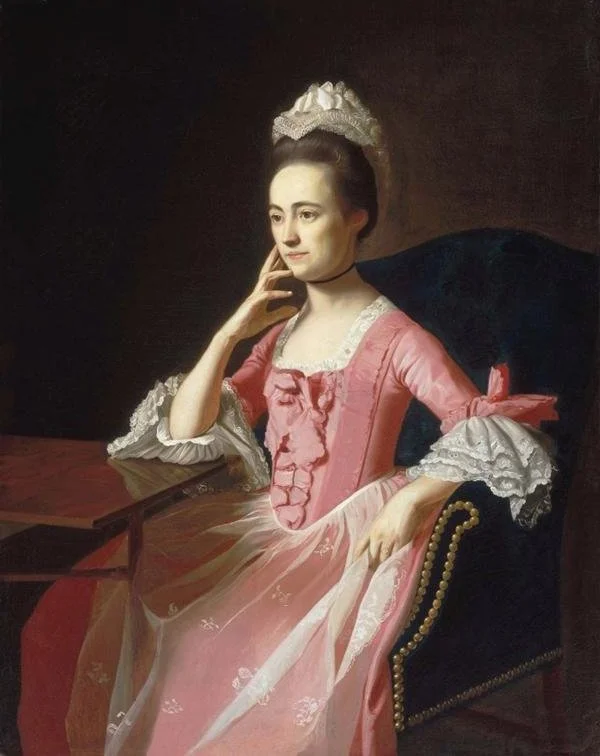
Revere made his way back to the Clarke house to find Hancock and Adams still arguing about whether or not to stay and fight, while Hancock’s fiancée Dorothy Quincy and aunt Lydia Hancock tried to help the frantic family hide their valuables. This time, Revere personally escorted the men to a nearby safe house shortly before dawn, while the women stayed behind, hoping that splitting up would ensure their safety. Revere then returned to Lexington and helped to remove a trunk of papers that Hancock had kept at the Buckman Tavern, likely full of documents related to the Provincial Congress. He made it across the common just before the battle began.
How do we know what we know?
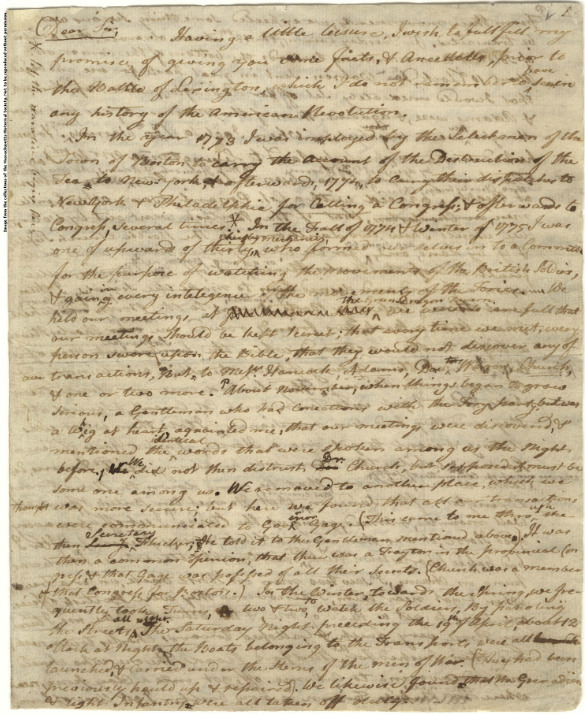
In the days following the battle, the Committee of Safety took sworn depositions from those who had witnessed the battle on Lexington Green, or who had been harassed by the British soldiers - and Revere had done both. In his first account, he outlined the basics of his mission and his poor treatment by the soldiers, even mentioning that one of them had threatened to “blow his brains out.” He refrained from giving too much information about the layers of planning that the Committee had set up beforehand, however, including the lantern signals.
In 1798, Jeremy Belknap, the president of the newly-founded Massachusetts Historical Society, asked Revere to expand upon his story so that it could be saved for posterity. This letter, which includes more detail of Revere’s workings with the Committee, along with his original depositions, are still in the collections of the Historical Society. You can read them online here.
We have information about the events of the Hancock-Clarke House from multiple sources, including Dorothy “Dolly” Hancock. In 1822, Hancock attended a dinner party and was seated with William Sumner, an early history buff. He asked her to regale him with stories of the Revolution, and later wrote down her account and published it with the Massachusetts Historical Society. She spoke of her husband’s eagerness to spring into action, polishing his sword and pistols, and only being dissuaded from fighting by Samuel Adams. She also stated that her husband prevented her from returning to Boston to rescue family, responding to his orders with with “Recollect, Mr. Hancock, I am not under your control yet.”
One of Reverend Clarke’s daughters, Betty, also wrote about her experiences in a letter to a niece in 1840. In it, she recollected Dolly’s calm helpfulness in the midst of the chaos. “I can see just as plain,” she wrote, “Aunt Hancock and Miss Dolly Quincy with their cloaks and bonnets on, Aunt crying and wringing her hands and helping Mother dress the children, Dolly going round with Father to hide money, watches and anything down in the potatoes and up garret.” Betty Clarke also wrote of witnessing the mass burial that her father presided over the following afternoon. She was the last of the Clarkes to live in the parsonage, until her death in 1844. It is much to her credit that the house is well-preserved as it is.
It is invaluable to have multiple historical sources from women who experienced the civilian perspective of battle, and can recount details of the events that those in positions of military power may have deemed inconsequential. Their words give us a full perspective of what it was like to witness the opening shots of the American Revolutionary War.